Before we ever thought about building a platform, we sub-leased part of a warehouse to other small businesses who needed the space. It taught us more in a few months than we expected going in — some of it obvious in hindsight, most of it not.
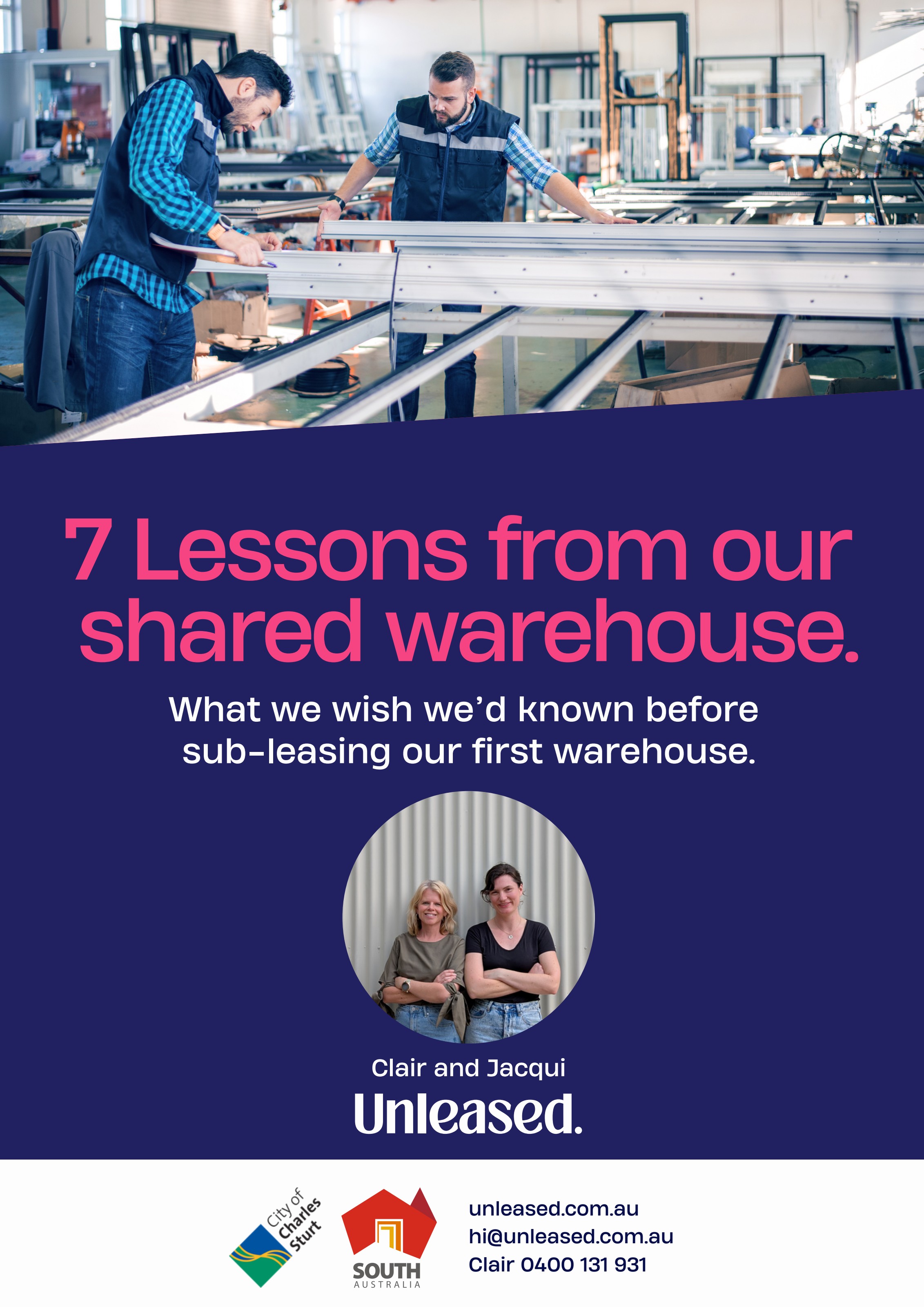
We’ve written up the seven lessons that would have saved us the most time, money and headaches as a free guide. Here’s a taster of each one.
“165 square metres between four businesses, there’s no room for ambiguity. Everything has to be thought through before someone moves in.”
Free guide
Want the full guide, not just the taster?
The full 15-page guide covers all seven lessons in depth — the lease-clause checklist, the floor-plan pro tips, the strong-fit vs high-risk tenant table, the pricing benchmarks and the payment protections. Pop in your name and email and we’ll send it straight to your inbox.
Get the free guide15 pages · Free · Sent straight to your inbox
Lesson 1
Your lease is the first thing to check
Before you measure the space or talk to a single tenant, read the subletting clause — it can save weeks of wasted preparation.
Lesson 2
How you divide the space determines whether it actually works
In a small warehouse there's no buffer for poor planning — access, roller doors and shared zones all need to be thought through before anyone moves in.
Lesson 3
Understand what regulations apply to business activities
“Can I sub-lease this space?” and “can this business legally operate from this space?” are different questions — and both need an answer.
Lesson 4
The right tenant is important
In a small shared space, the wrong tenant doesn't just cause friction — they make the whole arrangement unworkable.
Lesson 5
Price the space properly
The instinct to price low and fill fast usually backfires. Small, flexible, well-located space is genuinely scarce — and can attract a premium.
Lesson 6
Paperwork and house rules
Two things prevent almost every problem in a shared warehouse: a proper agreement, and a one-page set of house rules. You need both.
Lesson 7
Getting paid on time — you're not a bank
The tenant who ends up three months behind usually starts as one week late. The right structures — and acting early — make all the difference.
Free guide
Get all seven lessons in full — free
The full 15-page guide covers all seven lessons in depth — the lease-clause checklist, the floor-plan pro tips, the strong-fit vs high-risk tenant table, the pricing benchmarks and the payment protections. Pop in your name and email and we’ll send it straight to your inbox.
Get the free guide15 pages · Free · Sent straight to your inbox
This article is general in nature and isn’t legal or financial advice. Every lease and premises is different, so get independent advice for your own situation.
Ready to make your space work?
List your spare space on Unleased
Free to get started. Takes about two minutes. And hear from ready businesses that fit your space.
Related